



Siddharth is a seasoned analyst in the online casino industry, known for his in-depth reviews of game mechanics, volatility, and RTP performance. With years of experience studying player behavior, he offers insights that balance strategy and entertainment. His favorite title is Plinko, admired for its simplicity, unpredictability, and rewarding gameplay.
Plinko strategy guide free in casino
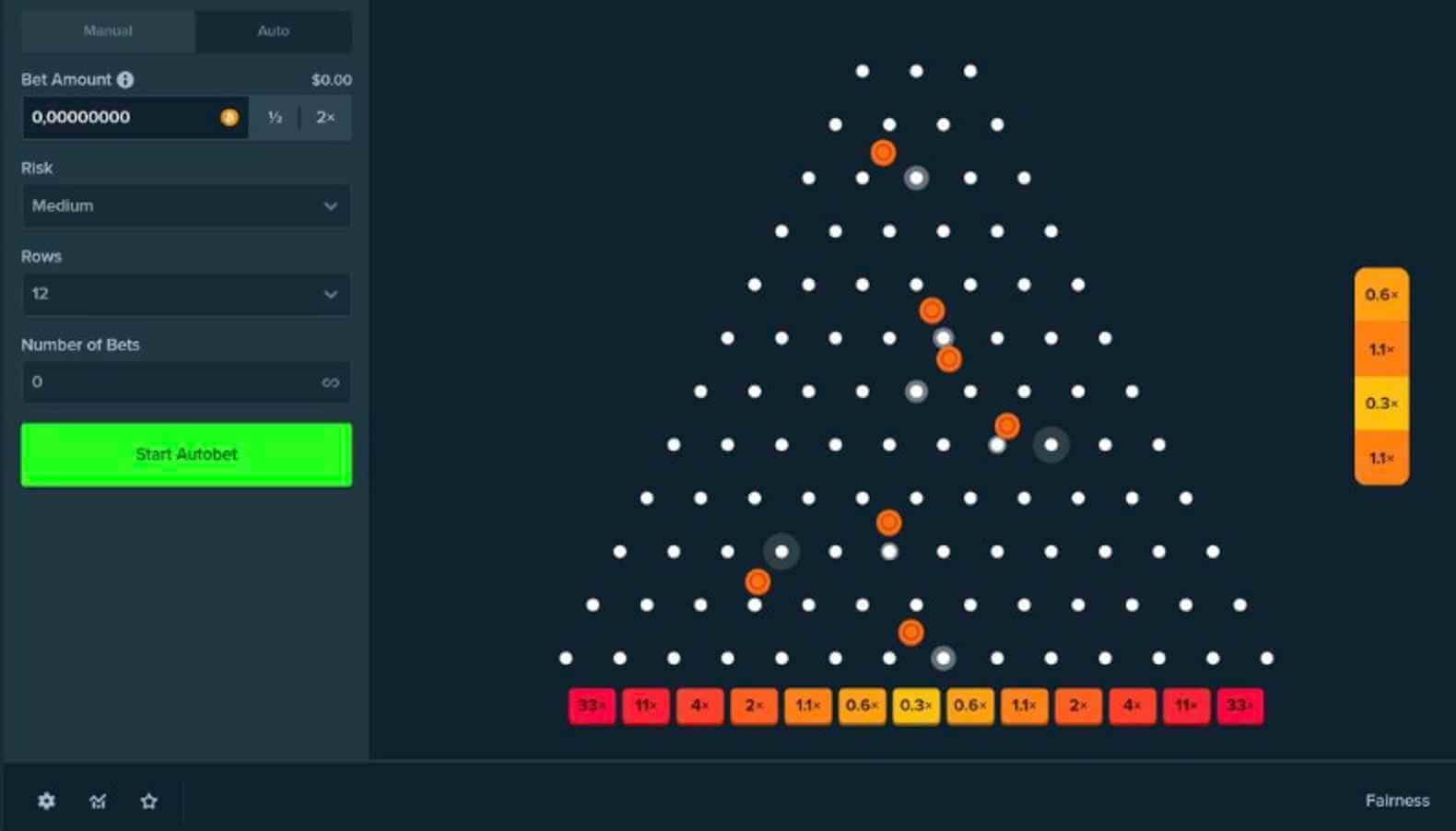
Plinko strategy is not about trying to predict outcomes. It is about building a simple, repeatable plan for bankroll control, risk choice, and session discipline, so your play stays consistent no matter how the rounds go. In this guide, we break down practical approaches for different risk profiles, explain how volatility affects results, and show how to structure a session with clear limits. The goal is not to promise wins, but to help you play with a system you can follow and measure.
Play DEMO
Play Plinko
Like this game
- Not for me
- I like it
- I love it
Contents
- 1 What a strategy really means in Plinko
- 2 Understanding RTP and volatility in Plinko
- 3 Bankroll management rules that actually work
- 4 Choosing risk level and rows based on your goal
- 5 Core play styles you can use responsibly
- 6 A simple strategy table you can copy
- 7 What to avoid: the habits that destroy results
- 8 How to track sessions like a pro
- 9 Building a repeatable plan for your next session
- 10 FAQs
What a strategy really means in Plinko
In many casino-style games, a strategy is often confused with a trick. With Plinko, there is no reliable way to force a specific result, because each drop is designed to be random. A real approach focuses on what you can control:
- how much you deposit and how much you are willing to lose
- how you size bets relative to your bankroll
- how you choose risk level and number of rows
- how long you play and when you stop
- how you review results and adjust responsibly
In other words, Plinko strategy is a framework for consistency, not a promise of profit.
A strong plan is boring on purpose. It reduces impulsive decisions and protects you from chasing losses after a bad streak.
The three pillars: bankroll, risk, discipline
A practical plan can be built around three pillars:
- Bankroll rules
You decide the money you can afford to spend and treat it as entertainment cost. - Risk management
You choose settings that match your comfort level and avoid jumping between extremes without a reason. - Discipline
You set session limits and follow them even when emotions push you to do the opposite.
Understanding RTP and volatility in Plinko
RTP (Return to Player) is a long-term average, not a guarantee for your session. It describes what a game is designed to return over very large samples. Your results can be far above or below that number in a short session.
This is why Plinko strategy always starts with managing variance rather than expecting stable short-term outcomes.
Volatility describes how “swingy” results feel:
- Low volatility: more frequent small outcomes, fewer dramatic swings
- High volatility: long quiet periods can happen, but big multipliers show up occasionally
In Plinko-style gameplay, volatility is affected by:
- risk setting (low/medium/high)
- number of rows (more rows usually increases spread)
- multiplier distribution (how rewards are placed across outcomes)

Quick comparison: what players usually experience
| Setting choice | Typical feel | What it’s good for | Main downside |
|---|---|---|---|
| Low risk | steadier results | long sessions, smaller swings | limited “big hit” excitement |
| Medium risk | balanced | mixed approach, testing | still can swing unexpectedly |
| High risk | sharp swings | chasing rare big multipliers | bankroll drains faster in bad runs |
No option is “best” in general. The best setting is the one you can sustain without breaking your limits.
Bankroll management rules that actually work
Most players lose control not because of the game mechanics, but because of bet sizing. A simple bankroll framework keeps you stable.
Recommended bet sizing ranges
A common disciplined range is to size each bet as a small percentage of your bankroll, for example:
- Conservative: 0.5% to 1% per drop
- Balanced: 1% to 2% per drop
- Aggressive: 2% to 5% per drop (high variance, higher risk of going bust)
If your bankroll is $100 and you bet $5 per drop, you are forcing an aggressive profile. Even a normal cold streak can wipe you quickly. Smaller bets buy you time and reduce emotional tilt.
With that in mind, Plinko strategy favors smaller stakes that keep your session alive through normal downswings.
A practical session plan
Use this checklist before you start:
- Set a hard loss limit (for example 20–30% of bankroll for that session)
- Set a win target (for example 10–20% profit)
- Decide session length (time-based or number of drops)
- Choose one risk level to test and keep it for the session
- Decide whether you will change rows or keep them fixed
When you plan the end before you begin, you avoid playing “until it feels right,” which usually ends in chasing.
Choosing risk level and rows based on your goal
The settings you choose should reflect what you want from the session: steady play, testing, or high-intensity swings.
Low-risk approach: control first
Low risk is often used by players who want to keep sessions longer and avoid sharp drops. It can be useful for:
- learning how settings affect outcomes
- building discipline and tracking
- playing with smaller bankrolls
A common approach here is to keep bets small and avoid increasing them after losses. If you want more action, adjust rows rather than jumping straight to high risk.
Medium-risk approach: structured testing
Medium risk is usually the most comfortable for many players because it can feel “fair” in short samples, even though randomness still dominates. The value of medium risk is that you can test:
- how your bet sizing holds up
- how quickly your loss limit is reached
- whether you are tempted to chase
If you cannot follow limits at medium risk, high risk will almost always punish you.

High-risk approach: rare outcomes, strict rules
High risk should be treated as a separate mode with stronger limits. If you play high risk, consider:
- reducing bet size further (yes, smaller)
- shortening sessions
- using a lower loss limit
- avoiding “double-up” behavior after misses
High-risk settings can produce long stretches of unimpressive returns. If you are not emotionally ready for that, do not force it.
Core play styles you can use responsibly
There are a few common play styles. None of them “beat” the game, but they can help you play consistently.
Below are common templates players use to structure a Plinko casino without relying on myths.
Flat betting: simplest and most stable
Flat betting means you keep the same bet size for the entire session. This is the most disciplined option because it limits emotional decisions.
Why it works (psychologically):
- fewer impulse adjustments
- easier tracking and review
- lower chance of tilt
How to use it:
- pick a bet size between 0.5% and 2% of bankroll
- keep risk and rows fixed for the session
- stop at your loss limit or win target
Step-up after wins: controlled aggression
Instead of increasing after losses, you increase only after reaching a small profit milestone. This reduces “chasing energy.”
Example framework:
- Start with $1 bets
- After you are up +$5, increase to $1.20
- After +$10, increase to $1.50
- If you drop back below the previous milestone, return to the prior bet size
This keeps increases tied to performance, not emotion.
Split sessions: two phases, two moods
A split session is useful when you want variety but still stay structured:
- Phase A (70% of the time): low/medium risk, small bets
- Phase B (30% of the time): medium/high risk, smaller time window, strict limits
Rules:
- You pre-decide the switch point (time or number of drops)
- You do not switch early because of boredom
- You end the session when the plan says so
This method protects you from turning the whole session into a high-risk chase.

A simple strategy table you can copy
Use this as a reference to build your own plan.
| Player type | Risk level | Bet size | Session length | Stop-loss | Win target |
|---|---|---|---|---|---|
| Conservative | Low | 0.5%–1% | 100–200 drops | 20% | 10% |
| Balanced | Medium | 1%–2% | 80–150 drops | 25% | 15% |
| Aggressive (controlled) | High (short) | 0.5%–1.5% | 30–80 drops | 15%–20% | 20% |
Adjust the numbers to your own budget. The point is to decide first, play second.
What to avoid: the habits that destroy results
Even a solid Plinko plan collapses if you repeat these behaviors:
- Increasing bets after losses to “recover faster”
- Switching risk level every few minutes without a rule
- Playing without a stop-loss
- Extending sessions after hitting win target
- Treating a streak as proof you “figured it out”
The danger of chasing
Chasing usually follows this pattern:
- You lose more than expected
- You raise bets to catch up
- Variance hits again
- Your bankroll drops faster
- You become emotional and stop following any plan
If you want a real system, your system must contain a rule that stops chasing.
How to track sessions like a pro
You do not need complex analytics. A simple log improves discipline and shows patterns.
Track these fields:
- date and time
- bankroll at start
- risk and rows used
- bet size
- number of drops
- result (profit/loss)
- notes about your decisions (tilt moments, temptation, boredom)
Tracking turns Plinko strategy into a repeatable system you can actually improve over time.
Example session log format
| Session | Bankroll start | Settings | Bet | Drops | Result | Notes |
|---|---|---|---|---|---|---|
| #1 | 100 | Medium, fixed rows | 1.50 | 120 | -12 | Raised bet once, corrected |
| #2 | 100 | Low, fixed rows | 1.00 | 160 | +9 | Followed limits, calm |
After 10 sessions, you can see what settings cause you to lose discipline, not just money.
Building a repeatable plan for your next session
Here is a clean framework you can apply today:
- Pick bankroll for the session
Decide the amount you can afford to lose without stress. - Choose one main risk level
Pick low or medium if you are working on discipline. Use high only with stricter limits. - Set bet size
Keep it small enough that you can survive a normal bad run. - Set a stop-loss and win target
Write them down and commit. - Define the session length
Time limit or drop limit, not both if you want simplicity. - Play and log outcomes
Do not modify rules mid-session. - Review after the session
Change one variable at a time next session if you want to test.
That is a real framework. It is measurable, repeatable, and responsible.
If you follow this checklist consistently, Plinko strategy becomes a habit rather than a one-time experiment.
FAQs
Good Plinko strategy starts with responsible bankroll management. Set clear limits on how much you are willing to bet per session and adjust your risk level based on your comfort with potential wins and losses.

Siddharth Rao
Last updated: 16.01.2026