



Siddharth is a seasoned analyst in the online casino industry, known for his in-depth reviews of game mechanics, volatility, and RTP performance. With years of experience studying player behavior, he offers insights that balance strategy and entertainment. His favorite title is Plinko, admired for its simplicity, unpredictability, and rewarding gameplay.
Plinko game strategy in India
Plinko strategy starts with understanding that every drop is random, but your decisions around risk, staking, and session control shape how long you can play and how volatile your results feel. This guide breaks down practical, beginner-friendly approaches that focus on discipline and bankroll protection for players in India.
Play DEMO
Play Plinko
Like this game
- Not for me
- I like it
- I love it
Contents
Why Are Strategies Important in Plinko?
Plinko is attractive because it is simple to learn and fast to play, yet it can swing from small wins to sharp losses in a short session. That volatility is exactly why many players look for a structured approach: they want a repeatable way to control pace, limit downside, and avoid emotional decisions after a streak.
A Plinko strategy is not a method to predict outcomes. Instead, it is a framework for choosing risk level, sizing bets, and deciding when to stop. Those choices do not change the probability of where the ball lands, but they do change how your bankroll behaves across many rounds, which is the part you can actually manage.

Low Risk, Mid Risk, and High Risk Strategies
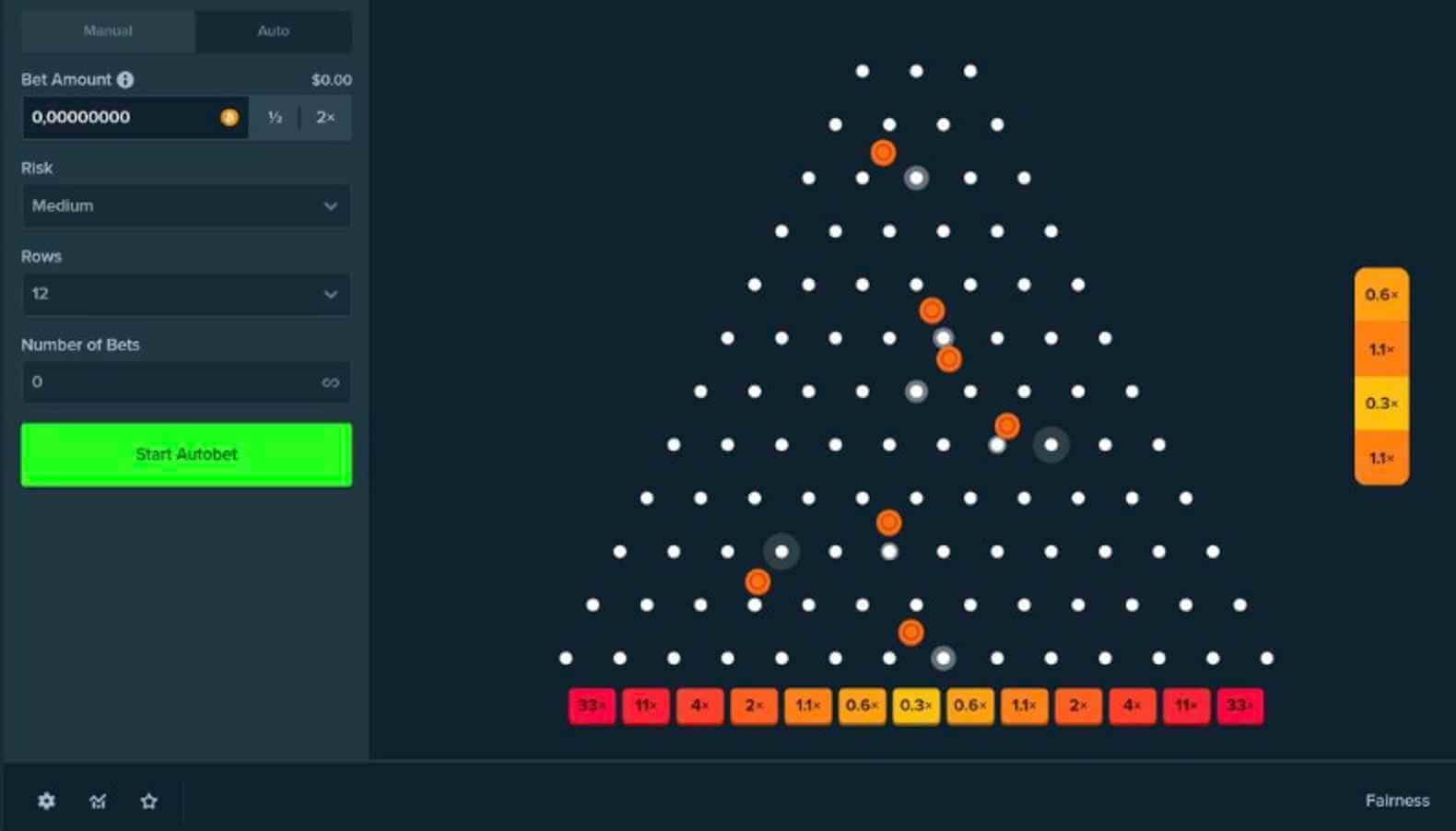
Choosing a risk setting is the most important strategic decision in Plinko. It defines volatility: how often you see smaller returns versus how rarely you hit larger multipliers. Your risk level should match your goal for the session, your comfort with swings, and the size of the bankroll you are willing to allocate.
Low Risk Strategy
Low risk play is designed for smoother sessions. You will typically see more frequent small multipliers and fewer extreme outcomes. This style suits players who want longer playtime, tighter control of drawdowns, and a steady rhythm without chasing large hits.
Common approaches at low risk include flat betting and conservative progression systems that reset quickly. The purpose is to reduce the chance that one short downswing forces you to increase stakes beyond your plan.
Mid Risk Strategy
Mid risk sits between stability and upside. It tends to produce a wider range of results, with more noticeable streaks and a higher chance of short-term swings. Mid risk is often chosen by players who want the possibility of meaningful multipliers while still keeping session variance manageable.
This is where structured staking systems can feel tempting. The key is to cap progressions and define exit points. A mid risk approach works best when you treat progressions as a bankroll pacing tool, not as a way to force a win.
High Risk Strategy
High risk is for players who accept sharp volatility in exchange for rare, high multipliers. Sessions can be short, and bankrolls can move quickly in either direction. High risk can be exciting, but it demands strict limits because chasing losses becomes easier when outcomes are extreme.
If you play high risk, keep the base bet small relative to your bankroll and set tighter stop-loss rules. High risk is also the easiest place to overuse aggressive progressions, which can escalate stakes rapidly and expose you to steep losses.
Which Strategy to Choose?
| Risk level | Typical multiplier range | Recommended bankroll size | Example strategies |
| Low | 0.2x to 5x | 150 to 300 base bets | Flat betting, gentle ladder, capped Labouchere |
| Mid | 0.2x to 20x | 250 to 500 base bets | Ladder with reset rules, Labouchere with limits, conservative Martingale |
| High | 0.2x to 100x+ | 500 to 1,000+ base bets | Micro-stakes flat betting, strict ladder caps, short-session Martingale with hard stop |
Many well-known systems, including Martingale, Labouchere, and ladder-based progressions, are often discussed as if they can change results. They cannot. What they can do is change how quickly you spend your bankroll and how you respond to variance.
Players frequently ask for the best Plinko strategy as if there is a universal winning formula. In reality, the most effective plan is the one that matches your risk tolerance, uses conservative bet sizing, and includes clear stop rules that you actually follow.
Bankroll Management
Any Plinko strategy should start with defining the bankroll for the session as money you can afford to lose, then treating it as a fixed budget with rules. Because Plinko is fast, unstructured play can quietly multiply losses, especially when players raise stakes to recover quickly.
A practical approach is to define your unit size first, then build the session around it. Many disciplined players keep the base bet at a small fraction of their bankroll so that normal variance does not push them into panic decisions. The goal is not to avoid losses entirely, but to keep losses within a planned range while giving yourself enough rounds for the game to play out naturally.

- Set a session bankroll and split it into units, then choose a base bet that uses only a small portion of those units.
- Define a stop-loss and a stop-win before you start, and end the session immediately when either limit is reached.
- Use time limits as well as money limits, because fatigue and impatience increase poor decisions.
- Track results in short blocks, then reassess risk level and bet sizing instead of changing stakes impulsively mid-streak.
Beginners often make the same mistakes: increasing bets after a losing run, switching risk levels repeatedly, and treating a short streak as evidence that a certain path is due. Another common issue is using progression systems without a cap, which can force bet sizes upward faster than the bankroll can support.
Expert Tips
Most long-term success in Plinko slot is not about clever formulas, but about consistency and self-control. Treat your plan like an operating procedure: pick a risk level, pick a base bet, and keep the rules simple enough that you can follow them under pressure.
Demo mode is the best environment for testing. It lets you see how volatility feels at different risk settings, how quickly staking systems escalate, and how often resets are needed. Practicing first also reduces the urge to improvise when real money is on the line.
- Choose one risk level per session and avoid switching after a few unfavorable drops, since that usually reflects emotion, not analysis.
- If you use a progression system, cap the number of steps and reset quickly to protect the bankroll from runaway stake growth.
- Keep records of base bet, risk level, and stop points so you can evaluate decisions rather than relying on memory.
- Use demo mode to test how your plan behaves across at least a few hundred drops before applying it with real stakes.
- When you hear claims about a best Plinko strategy, treat them as marketing language and focus on measurable controls like bet sizing and session limits.

Provably Fair System
A Provably Fair system is a transparency framework that allows players to verify that outcomes were generated fairly and were not manipulated after the bet was placed. Instead of asking players to trust a black box, Provably Fair setups publish cryptographic commitments that can be checked.
In most Provably Fair implementations, the result of each round is determined by a combination of a server seed and a client seed, plus a round counter called a nonce. The server commits to its seed in advance by sharing a hashed version of it, which prevents changing it later without detection. After the session or after a seed rotation, the server seed can be revealed so the player can verify that the published hash matches.
For Plinko, Provably Fair matters because the game feels physical and intuitive, yet it is fundamentally a random process. Verification tools help confirm that the ball path and final landing result were produced by the committed random inputs, not adjusted in response to your bet size, your recent results, or your timing. This does not reduce variance or guarantee a favorable outcome, but it increases trust by enabling independent checks.
FAQs
Strategies can help you control bankroll use, reduce impulsive bet changes, and set clear stop rules. They do not change the underlying randomness of where the ball lands, so they cannot guarantee consistent profits.

Siddharth Rao
आखरी अपडेट: 16.01.2026