



Siddharth is a seasoned analyst in the online casino industry, known for his in-depth reviews of game mechanics, volatility, and RTP performance. With years of experience studying player behavior, he offers insights that balance strategy and entertainment. His favorite title is Plinko, admired for its simplicity, unpredictability, and rewarding gameplay.
Plinko Strategy Online in Philippines
Plinko strategy is often discussed as a way to make gameplay feel more controlled and sustainable, especially for new players. This guide explains what strategy can and cannot do, with practical decision frameworks suited to players in the Philippines.
Play DEMO
Play Plinko
Like this game
- Not for me
- I like it
- I love it
Contents
Why Are Strategies Important in Plinko?
Players look for strategies because Plinko can feel deceptively simple: drop a ball, watch it bounce, get a result. That simplicity can hide how quickly volatility and bet sizing influence a session’s longevity.
It is essential to be clear about what a Plinko strategy really targets. Plinko is chance-based, and each drop is independent. You cannot steer the ball, predict the final slot, or force a payout pattern.
Where strategy still matters is in the decisions you control: risk profile, stake size, session limits, and how you respond to variance. These choices can reduce the chance of burning through a bankroll too quickly and help you keep results within a range you consider acceptable.
Low Risk, Mid Risk, and High Risk Strategies
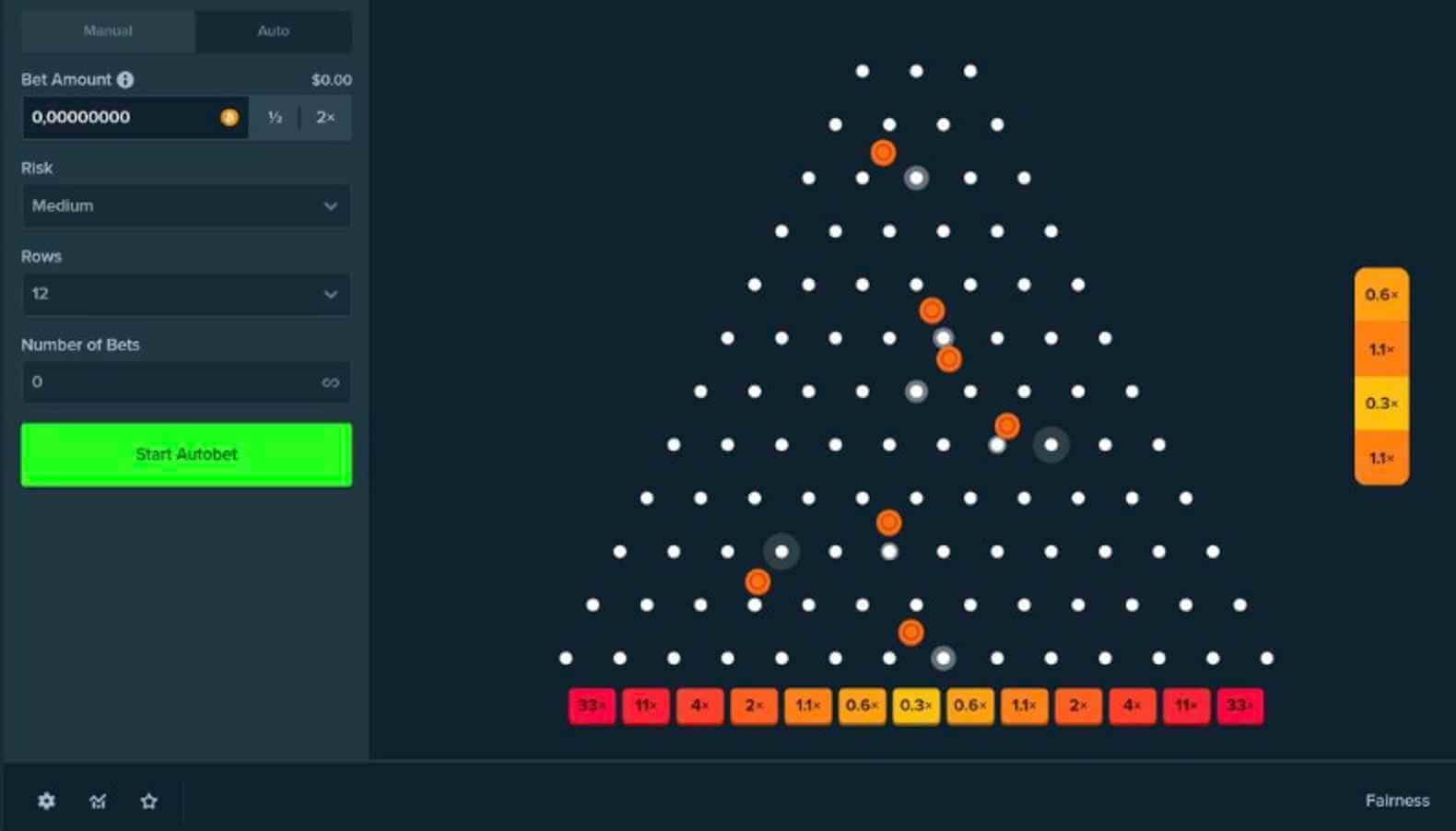
Risk settings in Plinko usually reflect volatility: how frequently smaller payouts appear versus how rarely large multipliers hit. Different risk levels also influence the emotional rhythm of play, which can affect discipline and consistency.
A strategic approach here is choosing a risk profile that matches your goals for the session. Some players prioritize longer playtime and smoother results, while others accept long dry spells in exchange for occasional spikes.

Low risk approach
Low risk tends to produce more frequent small outcomes and fewer extreme swings. Multipliers are typically modest, with larger hits being rare or capped lower compared to higher-risk settings.
This approach suits players who want steadier bankroll movement and who prefer to evaluate performance over many drops. It is also where disciplined flat betting and strict stop limits are easiest to execute.
Mid risk approach
Mid risk sits between consistency and volatility. Smaller outcomes may still appear often, but you are more exposed to streaks that push the bankroll up or down.
This approach is often paired with structured staking systems, where bet sizes adjust cautiously after wins or losses. The main advantage is flexibility, but it requires strong limit-setting to avoid escalating stakes during a downswing.
High risk approach
High risk emphasizes rare, high-multiplier outcomes. The trade-off is longer losing sequences and larger swings, which can pressure decision-making.
This approach is best treated as a controlled experiment rather than a default setting. If you play high risk, it helps to separate the bankroll for this mode and predefine how many drops you will attempt before stopping, regardless of results.
Below is a comparison table to help you match risk profile to session objectives. Multiplier ranges vary by implementation, but the relationships between volatility, session stability, and bankroll demands are consistent.
| Risk | Typical multiplier range | Recommended bankroll amount | Example strategies |
| Low | 0.2x to 5x | Larger relative to bet size for longer sessions | Flat betting, conservative ladder, strict stop-loss |
| Mid | 0.2x to 20x | Moderate buffer to tolerate swings | Labouchere with tight caps, mild ladder, partial profit lock |
| High | 0.2x to 1000x+ | Dedicated high-variance budget only | Micro-stakes, capped Martingale, fixed number of drops |
It is important to underline what these systems actually influence. They affect bankroll management, session length, and the size of individual bets. They do not change the underlying probabilities of Plinko or improve the expected outcome of a single drop.
When building a Plinko strategy around risk levels, the goal is to align volatility with your tolerance for drawdowns. If the swings feel uncomfortable, the strategy is misaligned even if it looks good on paper.
Bankroll Management
Bankroll management is the practical core of disciplined play. Without it, even a conservative risk setting can lead to overspending when variance turns against you.
Start by separating entertainment budget from essential finances. Then define a session bankroll that you can afford to lose without pressure. The point is not to avoid losses entirely, but to keep them within a planned boundary.
Bet sizing is where many beginners struggle. If your stake is too large relative to your bankroll, normal variance can end the session quickly. Smaller stakes give more attempts, more time to observe volatility, and fewer emotionally driven decisions.
Common mistakes include chasing losses, raising stakes after a bad streak, and ignoring stop limits when a session starts poorly. Another frequent issue is changing risk level and staking system at the same time, which makes it hard to understand what caused the outcome.
Use a simple control framework and stick to it for the session:
- Set a maximum loss limit and a separate profit target before you start.
- Choose one risk setting and keep it unchanged for a defined number of drops.
- Decide a base stake that makes the loss limit last for many attempts.
- If you adjust stakes, cap the maximum bet size in advance.
- End the session when either limit is hit, without exceptions.
Treat any Plinko strategy as a budgeting framework, not a prediction tool. If your rules are easy to break, they are not rules yet.

Expert Tips
Strong results in Plinko sessions usually come from consistency, not from complex staking math. The more complicated a system becomes, the easier it is to abandon under stress.
There is no single best Plinko strategy for everyone because players differ in volatility tolerance, session goals, and discipline. What matters is choosing a model you can execute calmly and repeating it long enough to evaluate how it behaves.
Before playing with real funds, use demo mode to test risk settings and staking rules. Demo sessions help you observe how streaks feel in practice, how quickly a bankroll can swing, and whether your limits are realistic.
Practical tips that tend to improve decision quality:
- Practice in demo mode until you can follow your limits without hesitation.
- Keep stakes small enough that a normal losing streak does not force a reactive decision.
- Avoid switching risk level mid-session unless your plan explicitly allows it.
- Use a fixed drop count per session to reduce impulsive extensions.
- If you increase stakes, do it slowly and with a strict maximum bet cap.
- Track basic outcomes over multiple sessions to understand volatility, not to chase patterns.
Provably Fair System
A provably fair system is a transparency mechanism designed to let players verify that results were not manipulated. Instead of asking users to trust a platform blindly, provably fair design provides cryptographic evidence that each outcome was determined fairly.
In many implementations, the outcome of a round is generated from a combination of values, often including a server seed and a client seed. The server seed may be committed in advance through a hash, so it cannot be changed after the fact without detection. After the session or round, the revealed values can be checked to confirm the result was produced as claimed.
How this applies to Plinko depends on the specific implementation, but the concept is consistent: the path or final slot is derived from verifiable random inputs. That makes the process auditable and reduces the risk of hidden result manipulation.
This matters because Plinko involves frequent, fast outcomes where trust is essential. A well-defined Plinko strategy is easier to apply when the randomness is transparent, since your decisions are based on consistent rules rather than doubts about the integrity of the game.

Responsible Gambling Warning
No strategy can guarantee wins in Plinko slot, and no system can remove variance. The purpose of strategic structure is to manage budget, reduce impulsive decisions, and keep play within limits you can sustain.
If you feel pressure to recover losses, take a break. If you are extending sessions beyond your plan, lower stakes or stop for the day. Consider using built-in tools such as deposit limits, time reminders, or self-exclusion where available.
Responsible play is especially important for players in the Philippines, where convenient digital payments can make it easy to overspend without noticing. Treat Plinko as paid entertainment, not income, and keep the session outcome separate from financial goals.
FAQs
Strategies work only in the sense that they shape how you manage your bankroll, risk exposure, and session limits. They do not influence the random outcome of any single drop, and they cannot change the game’s long-term probabilities.

Siddharth Rao
Last updated: 16.01.2026